

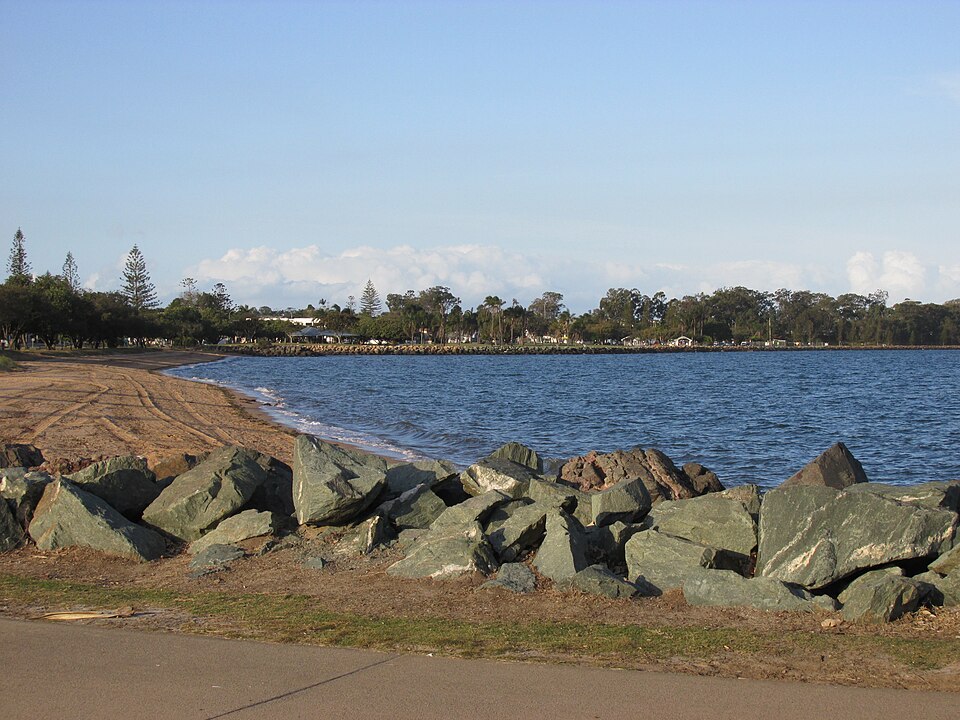
Pelican Park, Clontarf — the long foreshore reserve that defines the suburb's character. Stretching along Moreton Bay with walking paths, playgrounds, and uninterrupted views across to Brisbane, it's the heart of a community that's been quietly growing since the 1880s.
Ningy Ningy Country and First Contact
Long before European arrival, the land now known as Clontarf was part of the traditional country of the Ningy Ningy people, who belonged to the Undambi language group. The Indigenous name for the wider Redcliffe area — Kau-in-Kau-in — referred to the blood-red cliffs visible from the bay, a name that captures the dramatic geology of the peninsula's western shoreline.
On July 17, 1799, Matthew Flinders — the explorer who would later circumnavigate Australia — landed at Clontarf Point during his survey of Moreton Bay. It was one of the first recorded European landings in the region. The point he named still bears the Clontarf name today, a quiet headland with views across the bay to Brisbane.
The First Queensland Settlement (1824)
Twenty-five years after Flinders' landing, the Redcliffe Peninsula became the site of Queensland's first European settlement. On September 13, 1824, Lieutenant Henry Miller arrived on the brig Amity with 14 soldiers and 29 prisoners, establishing a penal colony near what is now Humpybong Creek in Redcliffe, just a short distance from Clontarf's foreshore.
The settlement consisted of basic temporary structures — huts and tents. But within months, problems emerged: unsuitable soil for farming, inadequate fresh water, and conflicts with the local Ningy Ningy people. By February 1825, the colony was abandoned, relocated to the Brisbane River where the modern city of Brisbane now stands. The settlement's remains were later referred to as Humpybong — an Indigenous term meaning "dead houses" — describing the abandoned huts. Clontarf's foreshore looks across this historic waterway — the same stretch of bay that carried the Amity to its brief, ill-fated settlement.
The Irish Name and Early Development (1880s)
The area that would become Clontarf was designated as an agricultural reserve in the 1860s after the penal colony's abandonment. It wasn't until the 1880s that Clontarf began to develop as a residential area, with land sales for "Clontarf" and "Clontarf North" actively advertised. These promotions highlighted the prospect of a future "city of Redcliffe" and the convenience of a proposed ferry service to Brisbane.
The name Clontarf is thought to come from an Irish coastal fishing village — chosen because of the similarity in their coastal environments and the notable oyster beds that lined both shores. The Irish "Clontarf" translates to "the Plain of the Bull", a reference to the rumbling sound of the sea over sandbanks. St Peter the Fisherman's Anglican Church, built on Lucinda Street, became a local landmark — a fitting name for a community built around the bay.
The Hornibrook Bridge Era
The construction of the Hornibrook Bridge — the first of three bridges connecting the Redcliffe Peninsula to Brisbane — marked a turning point for Clontarf. The bridge dramatically reduced travel times from the peninsula to the city, transforming Clontarf from a remote coastal outpost into an accessible bayside suburb. The bridge was later replaced by the Houghton Highway and the Ted Smout Memorial Bridge, but the connection it established permanently changed Clontarf's character.
Clontarf Today
Clontarf today is a quiet, family-oriented bayside suburb with around 8,500 residents. Pelican Park is the centrepiece — a long foreshore reserve stretching along the water with walking paths, playgrounds, picnic areas, and uninterrupted views across Moreton Bay to the Brisbane skyline. The park is named for the pelicans that gather along the foreshore, a daily reminder of the suburb's coastal character.
The Hercules Road shopping strip serves daily needs. The Kippa-Ring station on the Redcliffe Peninsula line is a short drive south. The median house price of around $780K makes Clontarf one of the more affordable bayside suburbs on the peninsula — a suburb that witnessed the first European footfalls in Queensland, and is still a peaceful place to watch the sunset over the bay.
Who Should Buy Here?
Clontarf is for buyers who want genuine bayside living without the premium price tag. It's for families who will spend their weekends at Pelican Park, for retirees who appreciate the quiet coastal pace, and for anyone who likes the idea of living in a suburb where Flinders once landed, where Queensland's first settlers briefly made their home, and where the evening sun still sets over the same bay they sailed into.