

🏡 Brisbane North Q3 — median house prices up 4.2% YoY📊 Brisbane dwelling values up 1.8% over the past quarter✨ Free property appraisal — discover your home's value today
Request an appraisal
Suburb Insights/27 May 2026

Living in Redcliffe: Queensland's First (Failed) City

Redcliffe was the site of Queensland's first European settlement — a penal colony established in September 1824, six months before Brisbane. It failed — unsuitable soil, no fresh water, conflicts with the Ningy Ningy people. The settlement was abandoned and the colonists moved up the Brisbane River, founding what became the modern city of Brisbane. But Redcliffe survived. It became a seaside resort, then a coastal city in its own right — with its own hospital, showgrounds, markets, and a beach that's been drawing Brisbanites for two centuries.

Beverley Gibbons
Beverley Gibbons
Brisbane North Real Estate
Redcliffe was Queensland's first European settlement — a full 1824, a year before Brisbane. It was also Queensland's first failed settlement — abandoned after six months because the sandy soil couldn't grow crops and the water wasn't drinkable. The colonists moved up the Brisbane River, and Brisbane became the capital. But Redcliffe didn't disappear. It reinvented itself as a seaside resort, then a coastal city, and today it's the heart of the Redcliffe Peninsula — with its own hospital, showgrounds, Sunday markets, and a beach that's been entertaining Brisbane families for generations.
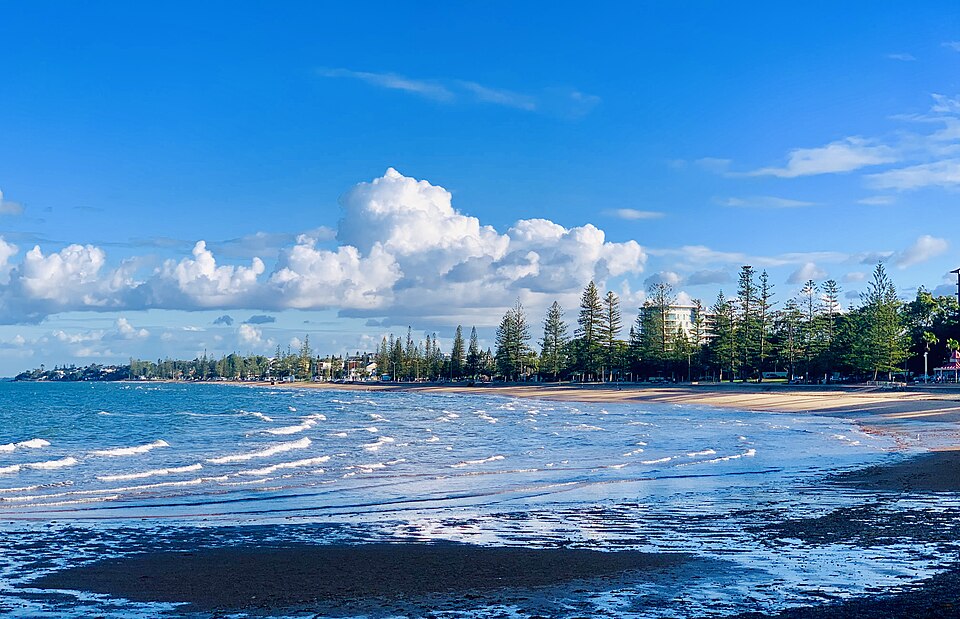
Redcliffe Beach — the heart of the peninsula
Present Day

Redcliffe Beach — the heart of the peninsula. The same stretch of Moreton Bay that carried the brig Amity in 1824 now carries weekend ferry passengers, kayakers, and suntanned families. Redcliffe has been a coastal destination for two centuries.

On September 13, 1824, Lieutenant Henry Miller arrived on the brig Amity with 14 soldiers and 29 prisoners. They landed at Redcliffe to establish Queensland's first European settlement — a penal colony. The location was chosen for its position on Moreton Bay, but the sandy soil couldn't support agriculture and fresh water was scarce. By February 1825, the colony was abandoned and relocated to the Brisbane River.

After the penal colony, Redcliffe lay quiet for decades — an agricultural reserve. The 1880s brought land speculation, and a passenger steamer service from Brisbane started in 1883. The Hornibrook Highway (1935) transformed the peninsula from a holiday destination into a commuter suburb, but Redcliffe retained its identity as a seaside town. The Redcliffe Hospital, Redcliffe Showgrounds, and Redcliffe Sunday Markets all grew to serve the growing population.

Today, Redcliffe is the peninsula's commercial and civic centre — the Redcliffe Hospital, the showgrounds, the markets, the Redcliffe Jetty, kilometres of foreshore parkland, and the Redcliffe Peninsula railway line (opened 2016) connecting to Brisbane in 45 minutes. The median of $920K reflects the suburb's position as the peninsula's most complete coastal city — not a village, not a suburb, but a genuine place with its own identity.

Who Should Buy Here?

Redcliffe is for buyers who want genuine coastal city living — not a beachside suburb that relies on Brisbane for everything, but a real city with its own hospital, its own events, its own character. It's for families who want the beach, the markets, the showgrounds, and a train line — all in one place. Queensland's first settlement didn't work out. The city that grew in its place certainly did.

📍 Related suburb guides

redcliffe

More from Suburb Insights

26 May 2026
Living in Albany Creek: From Chinaman's Creek to the Suburb That Never Left
Before it was Albany Creek, it was Chinaman's Creek — a name given by early settlers that stuck for decades, even though no Chinese people ever lived there. When locals finally petitioned for a change in 1885, they picked Albany Creek for 'sentimental reasons.' That sentimental streak has defined the suburb ever since. Seventeen kilometres north of the CBD, Albany Creek is the suburb where the population barely moved in a decade because nobody wants to leave. The story of how it got there — from James Cash's 1849 hut to the South Pine River crossings to the 1960s boom — is the story of Brisbane's northern growth, told in one suburb.
26 May 2026
Living in Bridgeman Downs: The Irish Bank Manager's Acreage That Became a Suburb
Fifteen kilometres north of the CBD, Bridgeman Downs is named after Henry St John Bridgeman, an Irish bank manager who bought a large tract of land here in 1860 but never actually lived on it. Pig farms and pine trees for 120 years — then the late 1980s brought developers, and the paddocks became palaces. Today it has the highest owner-occupier rate in the northern corridor at 68%, 24 parks, the iconic Two Brothers mansions on Beams Road that every local knows, incomes in the top 20% of Queensland, and a median price of $1.18M. The Irishman who never set foot on his own land wouldn't recognise it — but his name is on the map forever.
26 May 2026
Living in Sandgate: Brisbane's Original Seaside Escape
Long before the Gold Coast was a strip of high-rises, before the Sunshine Coast was a weekend destination, there was Sandgate. A pier. A foreshore. A train line that carried Brisbanites to the bay for a day of swimming, fish and chips, and salt air. The Sandgate Town Hall, built in 1913, still stands on Rainbow Street. Bathers at Moora Park — captured in a 1937 State Archives photo — look remarkably like the families who picnic there today. Eighteen kilometres north of the CBD, Sandgate has been doing the same thing for 170 years, and it's never gone out of style.

Thinking about property in Brisbane North?

Beverley would love to chat. Whether you're buying, selling, or just exploring your options — no pressure, just honest advice.

Request an appraisal
Browse all articles →