

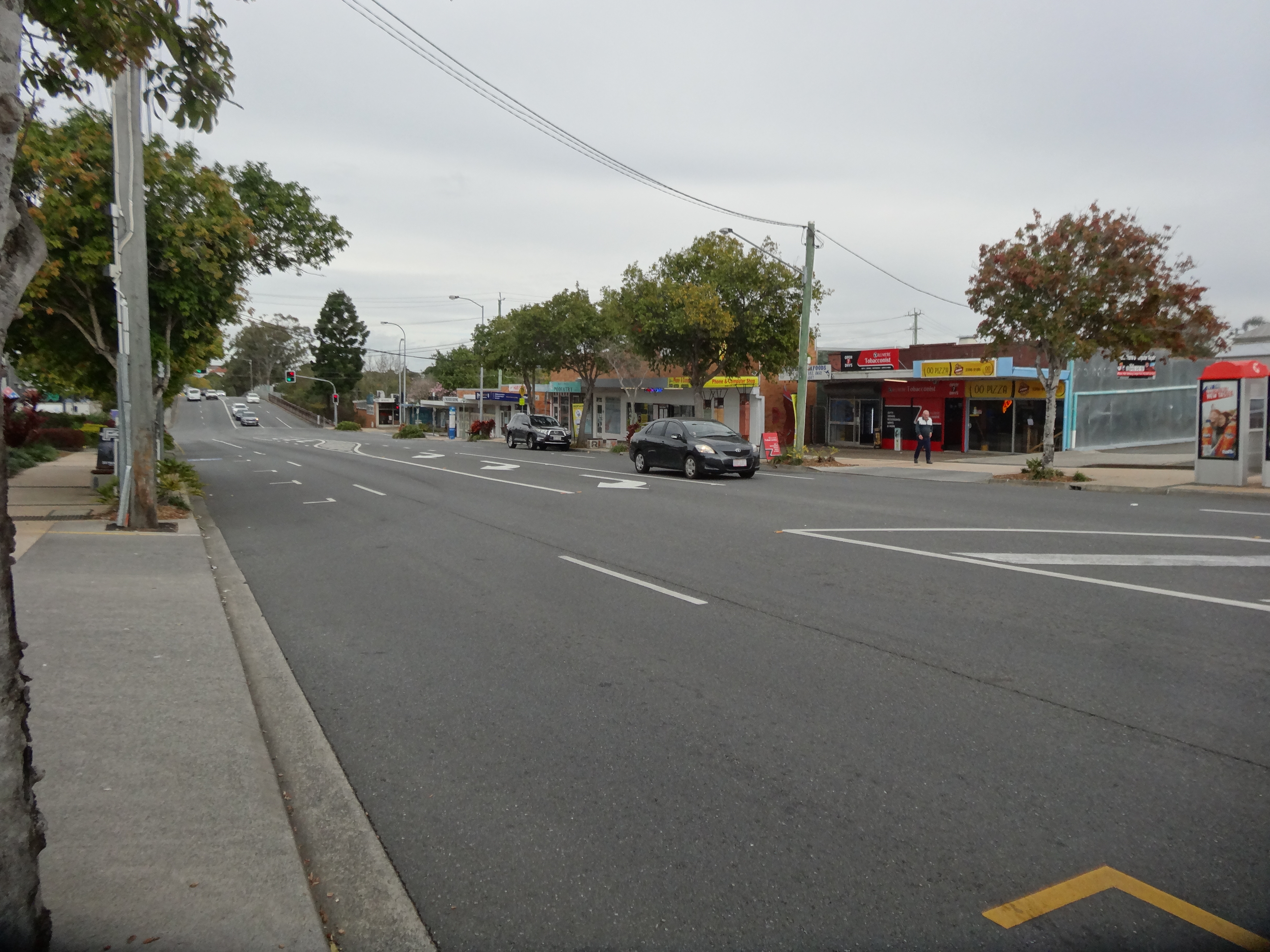
Zillmere's commercial centre, photographed in 2023. The strip has been through cycles of neglect and renewal, but the fundamentals — a train station, Kedron Brook, proximity to the city — have always been there. The 24% annual price growth reflects a market that's finally catching up to what the suburb actually offers.
Johann Zillmann's Waterholes (1838–1888)
Zillmere's story begins with Johann Leopold Zillmann — one of the thirteen German Lutheran missionaries who arrived at Zion Hill in 1838. Zillmann was a blacksmith and trainee missionary, a practical man sent to build and teach in the new settlement. When the mission wound down in the late 1840s, most of the missionaries dispersed. Zillmann stayed, becoming a respected colonist and, by 1870, the official agent for German migration to Queensland — a role that would shape the state's demographic character for generations.
The waterholes that bore his name — Zilman Waterholes — crossed Sandgate Road five kilometres north of Zion Hill. Farm lots were sold in the area from 1853. By the 1870s, the early signs of permanent settlement were visible: a German Baptist church (1871), a provisional school at Church and Zillmere Roads, and a Lutheran church (1875). The Zilman Waterholes School opened in 1877.
The Bacon Factory Town (1888–1950s)
Everything changed in 1888. The north coast railway opened, and the area — renamed from Zilman Waterholes to Zillmere — suddenly had a station. A post office opened. A new school was built in Murphy Road. And Zillmere's first bacon factory began operations.
Eight years later, Hutton's bacon factory opened west of the railway station. It became a landmark and Zillmere's largest employer — a largely self-contained establishment with on-site engineering staff and its own electricity generation. The 1897 Post Office directory listed Zillmere's inhabitants as "farmers (some of whom probably also had employment at Hutton's), a station master, a school master, and the bacon factory." It was a company town in miniature.
For the next sixty years, Zillmere was defined by that factory. The smell of bacon curing hung over the suburb. The shift whistle marked the day's rhythm. The railway carried products south and brought workers in. The 1911 census counted 655 people — a small community clustered around the station, the school, and the factory.
The Housing Commission Era (1950s–1970s)
After World War II, Zillmere became one of the first areas in Brisbane to receive prefabricated Housing Commission houses. These were the same austerity-standard homes that transformed Stafford — modest, functional, built quickly to house a generation of returned servicemen and their young families.
By the mid-1970s, Zillmere's residential development was substantially complete. The population had exploded from 522 in 1954 to 7,670 in 1976. The bacon factory was gone. The Housing Commission homes were ageing. The suburb entered a long period of quiet decline as the initial generation aged and the properties were passed to investors.
Zillmere Today — The Turnaround
Zillmere in 2026 is home to about 9,300 people, 13.2km from the CBD. The median house price of $820,000 — up 24% year-on-year — is the strongest growth in the northern corridor. That's not a blip. It's a correction — the market finally recognising that a suburb with a train station, a green corridor, and a 25-minute commute to the CBD shouldn't be the cheapest option in the region.
The Zillmere-Wavell Heights Sports Complex is a genuine community asset — one of the best sporting precincts on this side of the city. The Kedron Brook corridor provides a green spine for walking and cycling. The commercial strip is undergoing renewal, slowly shifting the narrative. The 48% owner-occupier rate is the lowest in the northern corridor — reflecting the investor-heavy legacy — but that's exactly the opportunity: as owner-occupiers discover the suburb, the dynamic shifts.
Who Should Buy Here?
Zillmere is for buyers who see the gap between reputation and reality. It's for the investor who understands that a Redcliffe Peninsula line station, 13km from the CBD, with a $820k median, is pricing in risk that's already receding. It's for the first home buyer who can't afford Aspley or Chermside but refuses to go to the outer growth corridor.
It's for anyone who understands that the best time to buy a changing suburb is when the reputation is still catching up to the numbers. And the numbers in Zillmere are very, very clear.