

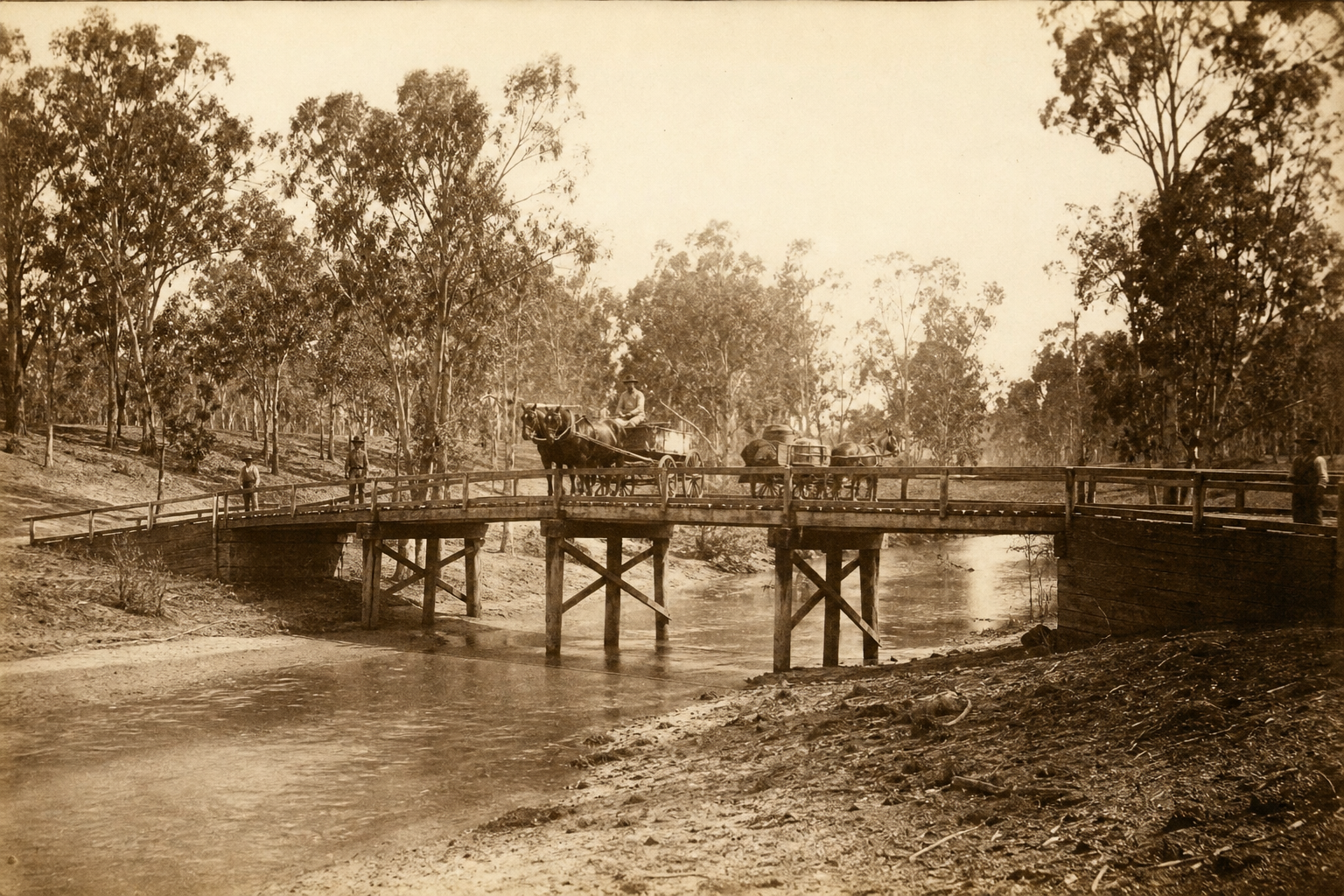
Brisbane's northern corridor has been shaped by infrastructure decisions dating back to the 1860s Gympie gold rush. This view shows the landscape that early settlers would have known — the Chinese market gardens along Kedron Brook, the Royal Exchange Hotel at the Gympie crossroads, and the army camp paddocks that would become Chermside's urban centre.
At a Glance: The Quick Comparison
| Metric | Stafford | Aspley | Chermside |
|---|---|---|---|
| Distance to CBD | 9 km | 12 km | 9.8 km |
| Median House Price | ~$950,000 | ~$1,050,000 | ~$980,000 |
| YoY Growth (est.) | +6.2% | +5.8% | +5.5% |
| Walk Score | 68 | 52 | 78 |
| Typical Block Size | 607 m² | 650 m² | 550 m² |
| Original Name | Happy Valley | Soldier's Flat / Little Cabbage Tree Creek | Downfall Creek |
| Year Named | 1886 | 1897 | 1904 |
| Vibe | Transitioning infill | Established family | Urban hub |
Stafford: From Happy Valley to Infill Hotspot
Stafford's story begins with pollution. Before the post-war boom made it a family suburb, this was where Brisbane sent its dirty industries — fellmongeries, tanneries, a wool scour. The Chinese market gardeners who arrived in 1857 grew vegetables along Kedron Brook while, just metres away, animal hides were being processed with chemicals that turned the creek into an environmental headache.
The Blackall Bridge, built in 1870, was the suburb's first major infrastructure — a crossing that connected this semi-rural fringe to the city. But it was the tramline extension of 1940 that truly transformed Stafford, paving the way for the housing commission estate that would follow.
Today, that post-war housing stock is exactly what makes Stafford so attractive. Those 600–700m² blocks, laid out on wide streets, are prime knockdown-rebuild real estate. You're not just buying a house — you're buying the land underneath it, in a suburb that's 9 kilometres from the CBD and changing faster than any of its neighbours.
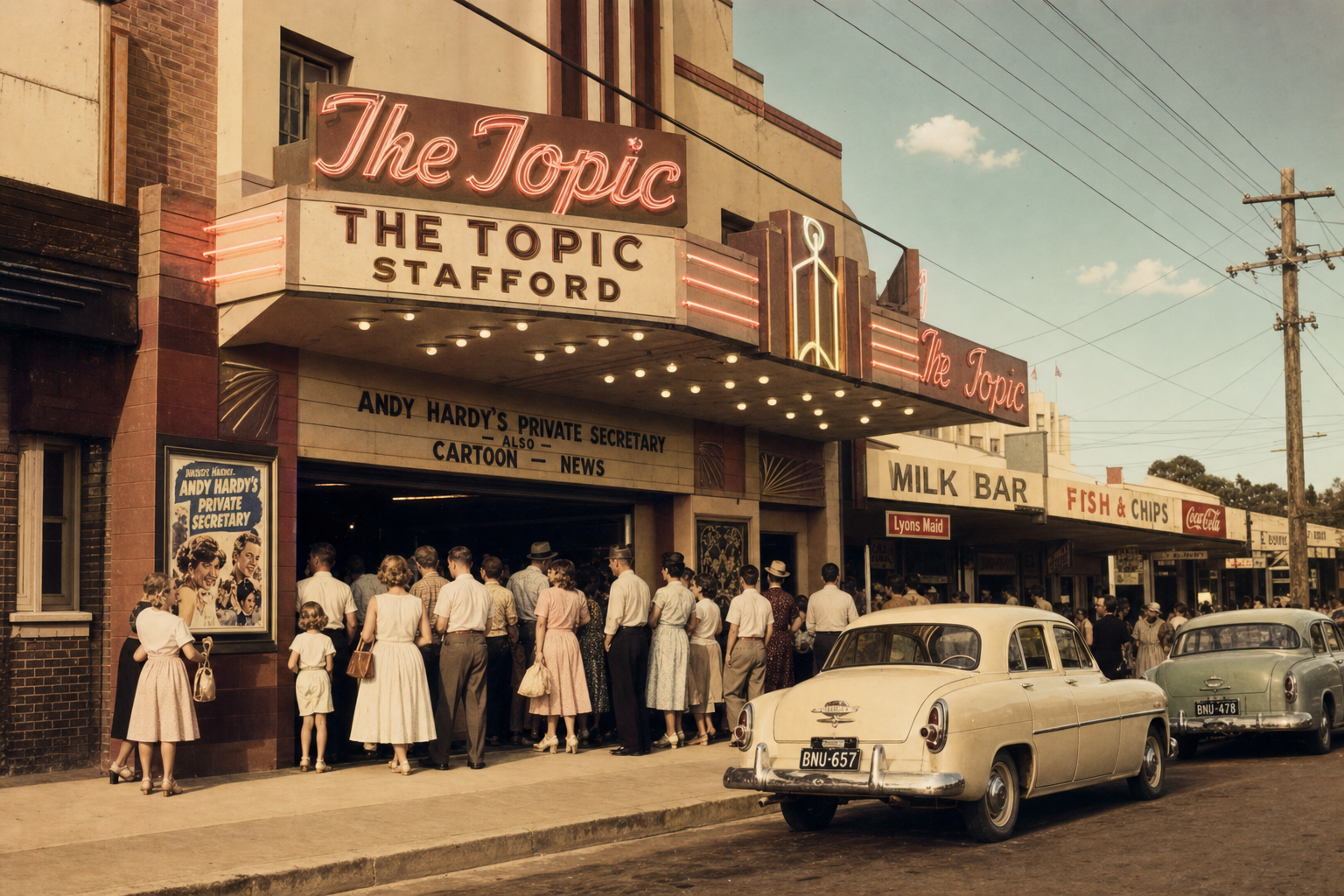
Opened in 1957, the Topic was Stafford's grand picture theatre — a social hub where post-war families gathered for Saturday matinees. It lasted only a few years. Television arrived, and the community's gathering place became a grocery store. The building is long gone, but older residents still remember it.
Best for: Buyers who want to build equity through renovation or land banking. Young families who want a proper yard and proximity to the city. Investors targeting the infill pipeline. If you're the kind of person who enjoys being part of a suburb's transformation rather than arriving after it's finished, Stafford is your pick.
Aspley: The Vineyard That Became a Garden Suburb
Aspley's origin story is gentler. Originally known as Soldier's Flat and then Little Cabbage Tree Creek, the area saw its first land sales in 1857 — the same year Chinese gardeners were tilling Stafford's creek banks. But Aspley's early character was shaped by John Morris, who purchased land near what is now Maundrell Terrace in 1865 and established the Aspley Vineyard.
Morris named his property after Aspley Hall in Nottinghamshire, England. The vineyard operated for over twenty years, and when the school and post office renamed the district in 1897, they chose Aspley. It's a name that still carries a hint of old-world charm.
The Royal Exchange Hotel, built at the Gympie Road crossroads in 1875, became the social anchor — a place where Cobb & Co coaches stopped on their way to the Gympie goldfields. It doubled as a general store. This was frontier hospitality, serving the traffic of a gold rush that had taken off in 1867.
Aspley developed differently from Stafford because of transport geography. Situated beyond the Chermside tram terminus, Aspley remained a farm community well into the 1950s. There was no railway line nearby. The first residential subdivisions only really took off in 1952, when allotments were offered at the corner of Gympie and Robinson Roads. A new kind of shopping centre — set back from the road with car parking — signalled the arrival of the automobile suburb.
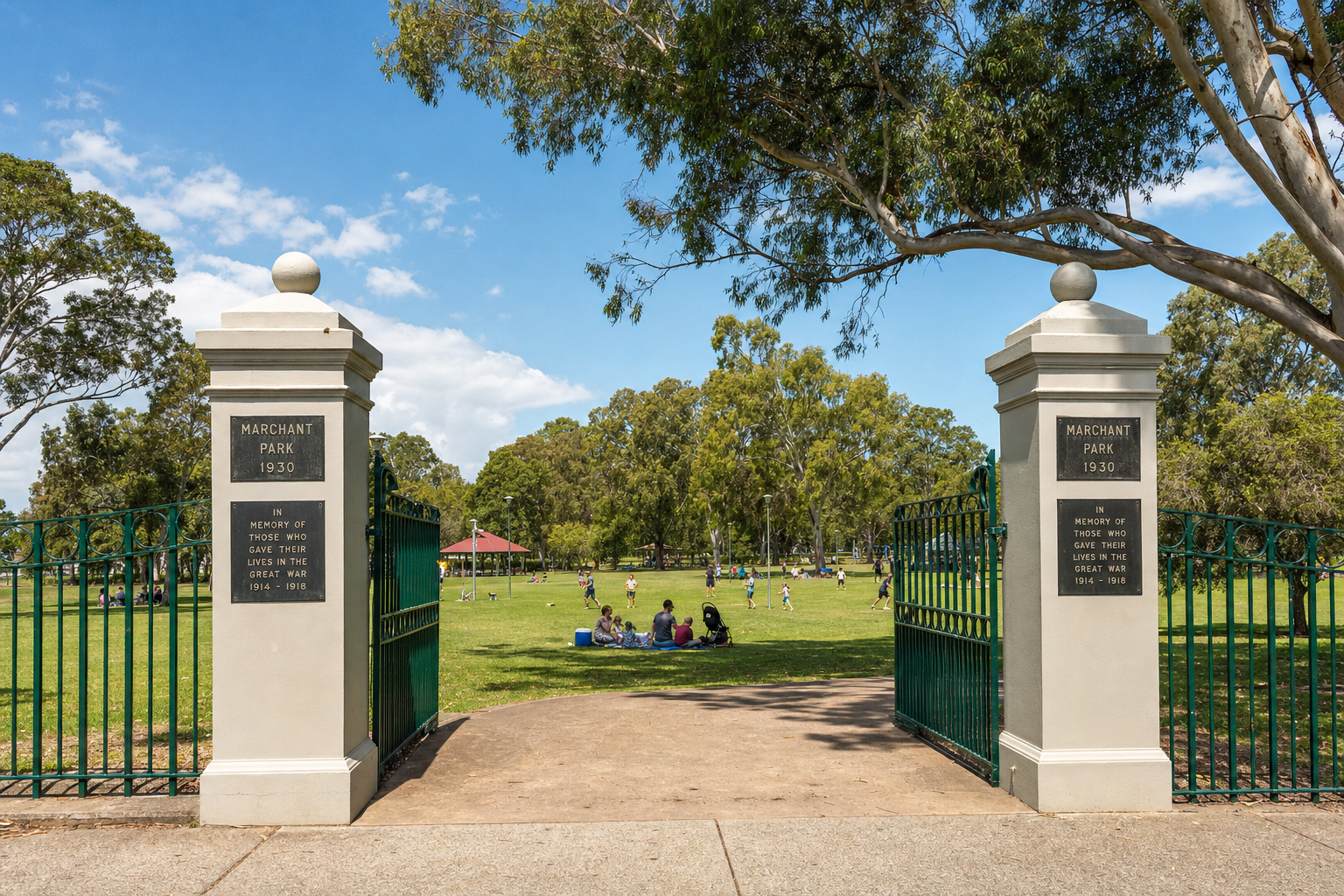
Donated by George Marchant, a soft drink manufacturer who recognised the growing community's need for open space. The park's memorial gates remain a cherished landmark, and the broader Marchant Park precinct is a hub of weekend sport and family gatherings — the kind of amenity that defines Aspley's family-first character.
By 1963–64, Aspley High, Aspley East primary, and a Catholic primary school were all open — and within ten years, they were bursting at the seams. The population had exploded from 912 in 1954 to over 10,000 by 1976. Craigslea schools were built to relieve the pressure.
Today, Aspley is the most established of the three suburbs. The blocks are bigger, the trees are taller, and the housing stock is predominantly solid brick homes from the 1970s and 80s. The Pick 'N Pay Hypermarket (now an Aldi-anchored centre) opened in 1984 on the site of the old public hall — a fitting symbol of Aspley's transition from rural crossroads to suburban hub.
Best for: Families who plan to stay put for a decade or more. Buyers who value established trees and a quieter streetscape. Anyone who wants a brick-and-tile home that's ready to move into without major work. Aspley doesn't change fast — and for many, that's exactly the point.
Chermside: The Army Camp That Became Queensland's Retail Capital
Chermside's story is the most dramatic of the three. Originally known as Downfall Creek — so named because gold rush travellers regularly got into trouble crossing the waterway — the suburb was renamed in 1904 after Sir Herbert Chermside, the Governor of Queensland.
But Chermside's real transformation began with war.
During World War II, the area now known as 7th Brigade Park was Sparkes' Paddock — a grassy expanse requisitioned by the Commonwealth in August 1940 to become the Chermside Army Camp. It was the largest AMF (Australian Military Forces) camp built in Brisbane during the war, designed to accommodate 3,500 conscripted men. The 7th Brigade, a Queensland militia unit that later distinguished itself in the Battle of Milne Bay in Papua New Guinea, trained right there on that paddock.
After the war, the camp was dismantled. The land sat empty until 1961, when Brisbane City Council acquired it for park and open space — a remarkable piece of foresight that gave us the 7th Brigade Park we know today, complete with its Avenue of Honour.
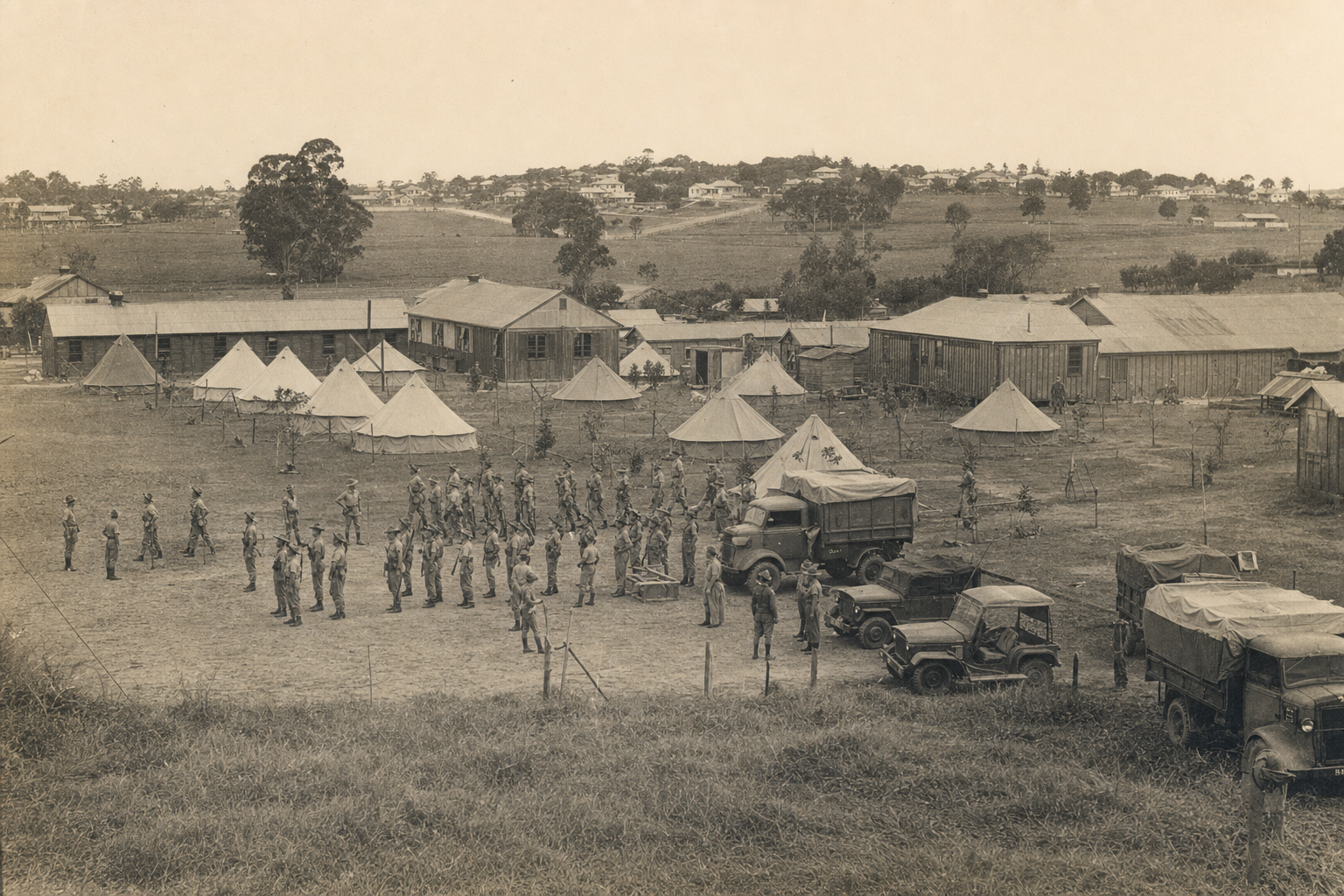
The largest AMF camp built in Brisbane during World War II. From October 1940 to April 1946, this paddock trained thousands of conscripted men — including the 7th Brigade, which later distinguished itself at the Battle of Milne Bay. The same land became 7th Brigade Park in 1961, a leafy community space that residents enjoy today.
In 1957, while Stafford's Topic cinema was showing its first films and Aspley was still a farming community, Chermside opened Australia's first drive-in shopping centre. It had 27 stores and parking for 1,200 cars. The idea was radical for its time — a destination where you could park once and shop at multiple stores under one roof. It was the beginning of the suburban retail revolution, and Chermside was ground zero.
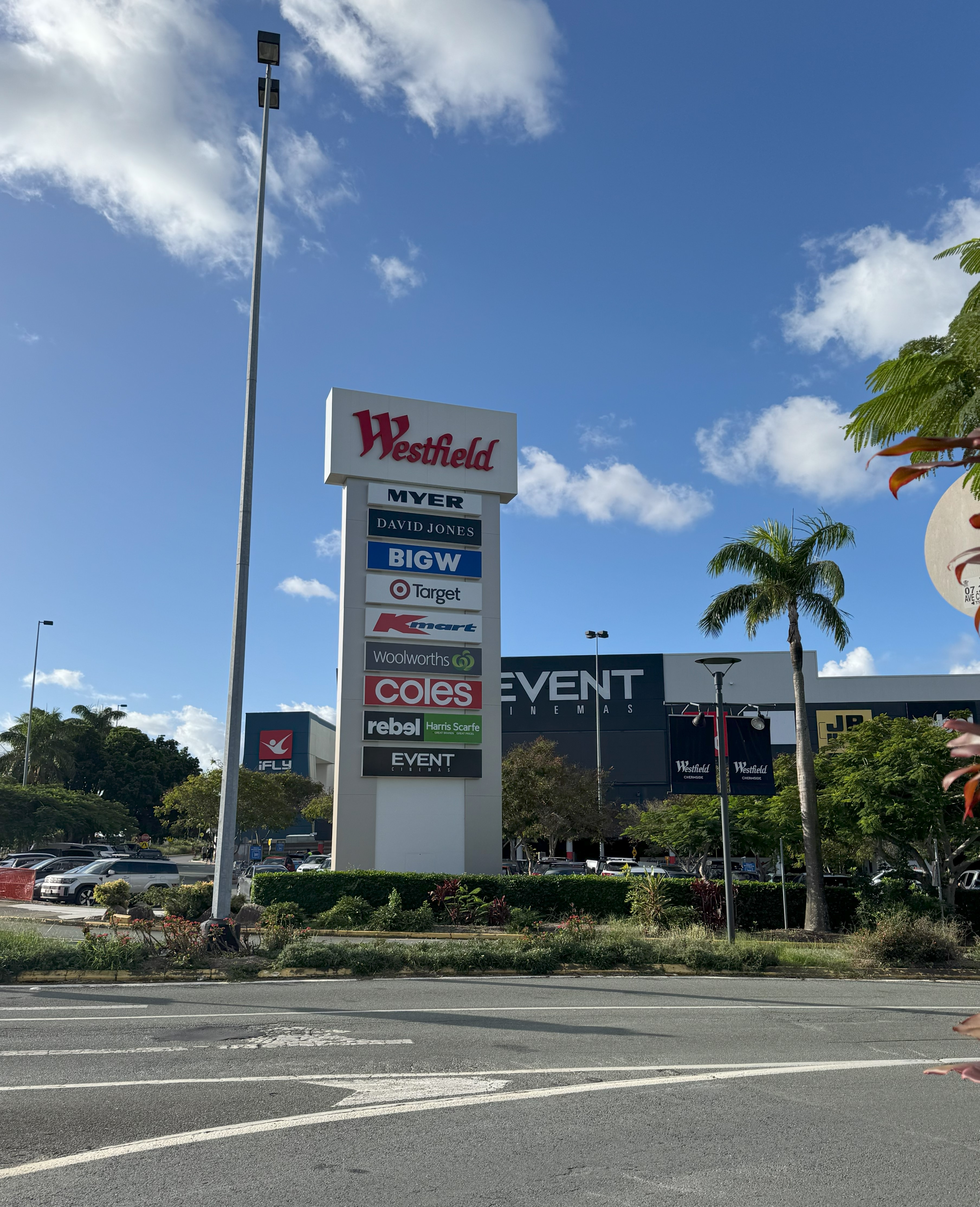
From Australia's first drive-in shopping centre with just 27 stores in 1957 to Queensland's largest — Westfield Chermside now has over 484 outlets. This April 2025 view of the Gympie Road entrance shows how far it's come from the paddocks that once hosted a WWII army camp.
By the 1980s and 90s, Chermside was on a trajectory that no other northern suburb could match. The Chermside Regional Business Centre was designated in 1987, attracting the Australian Tax Office and commercial development. Westfield acquired the shopping centre in 1996 and began an expansion spree that hasn't stopped — from 27 stores to over 484 by 2012, with a new dining and entertainment precinct added in 2017.
The Prince Charles Hospital, originally the Brisbane Chest Hospital in the 1950s, evolved into a world-class cardiac care facility. St Vincent's Private Hospital opened in 2001, creating a major medical precinct. The Chermside Major Centre Local Plan of 2005 unleashed high-rise development, forever changing the skyline.
Best for: Professionals who want walkable urban amenity. Downsizers trading a big house for a low-maintenance apartment. Anyone who values having Queensland's largest shopping centre, a major hospital, and a busway all within walking distance. Chermside is not quiet. It's not sleepy. It's an urban hub, and it's proud of it.
The Verdict: Which Suburb Fits Your Story?
There's no single "best" suburb — it depends on what chapter of life you're in.
Choose Stafford if you want to be part of a suburb on the rise, where you can literally watch the neighbourhood transform around you. You'll get the best land value for your dollar, the richest history, and the most dramatic upside. Stafford rewards people who see potential.
Choose Aspley if you're planting deep roots and want the reassurance of an established family suburb. The schools, the parks, the community clubs — they're all mature here. Aspley won't surprise you, but it won't disappoint you either. It's a suburb that knows what it is and doesn't need to change.
Choose Chermside if your priority is urban amenity and you're happy to trade block size for walkability. You'll have Queensland's best shopping, world-class healthcare, and a transport network that keeps getting better. Chermside is for people who want the city without living in the city.
Better yet, let's talk about your story — because the right choice comes down to street-level knowledge, not just statistics.
Who Should Buy Here?
Brisbane North Suburb Showdown is for buyers who appreciate what this suburb offers — and aren't looking for what it doesn't have. It's not for everyone. But for the right buyer, it's exactly right.