

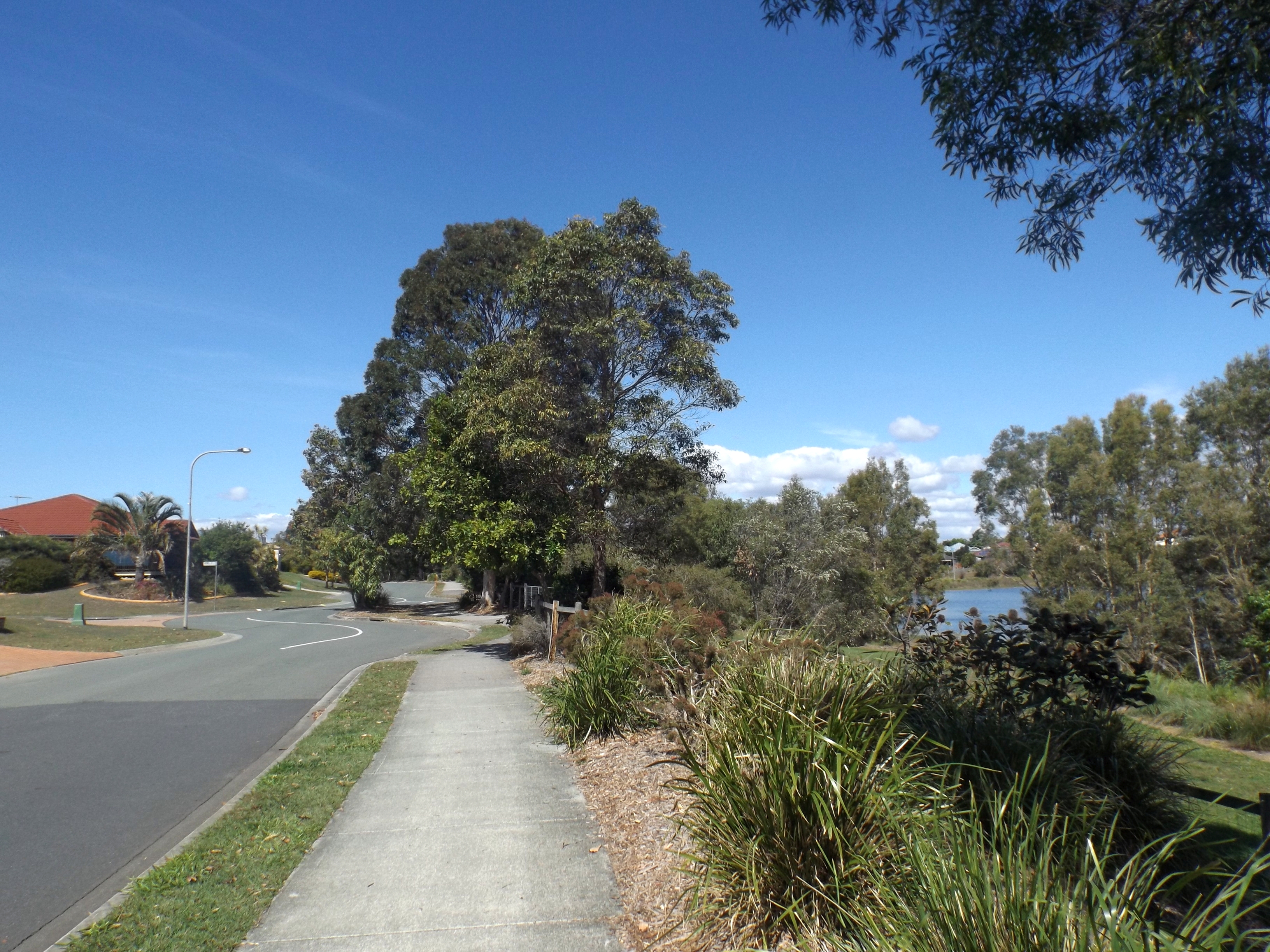
Topaz Drive looking across Halpine Lake — the kind of streetscape that defines Mango Hill's master-planned character. Wide streets, landscaped verges, parkland integrated into the residential fabric. This is what happens when the infrastructure comes before the houses.
Before the Plan — Pine Trees and Police Horses
Before it was Mango Hill, this land was a buffer zone between the Turrbal and Gubbi Gubbi people — a stretch of country neither clan claimed, valued for its position rather than its resources. European settlers arrived after Moreton Bay opened to free settlement in 1842, but the sandy soils proved better for grazing than cropping. The area stayed rural while the fertile river flats to the south were carved into farms.
In the 1880s, a subdivision called Campbelltown tried to establish a town for English migrants. The 1890s depression killed it. The Kinsella brothers bought the land in 1891, breeding and training police horses before turning to dairy farming. Their property, Allesnik, was the area's most substantial operation for decades.
Then came the pine trees. In the 1970s, Australian Paper Manufacturers (APM) acquired vast tracts and planted exotic slash pine plantations. They weren't successful — the trees struggled in the sandy ground — but they turned the landscape into a dense, dark-green monoculture that defined Mango Hill for a generation.
And in 1926, someone planted 700 metres of mango trees along the newly-built Anzac Avenue. Those trees — a living memorial to the first world war — gave the suburb its name. Locally known as Mango Hill since the 1950s, the name was finally made official in 1980.
The Plan (1990s–2010s)
In the mid-1990s, developers looked at the APM pine plantations and saw something no one else had: a blank canvas. The Mango Hill Estate began at the northern end of Kinsellas Road — the first stage of what would become one of Queensland's most ambitious master-planned communities.
The critical decision was infrastructure-first. Instead of selling blocks and promising amenities later, the planners committed to building parks, schools, and roads upfront. The Mango Hill Infrastructure Development Control Plan (2011) codified this approach — a detailed blueprint for a new town of 25,000 people with a major town centre, community facilities, and a transport network designed to work from day one.
The game-changer was the Moreton Bay Rail Link. The Redcliffe Peninsula line opened in 2016, giving Mango Hill two train stations — Mango Hill and Mango Hill East — with frequent services to Brisbane CBD (~49 minutes). For a growth corridor 28 kilometres out, this was transformative. It meant residents didn't need to fight the Bruce Highway every morning.
The Numbers (2006–2026)
The growth has been extraordinary:
2006: 2,556 people — a handful of homes in the original Mango Hill Village estate.
2016: 8,434 — the rail link opening triggered a wave of new estates.
2021: 14,921 — nearly double in five years.
2036 (projected): 22,000–25,000 — if the Urban Village delivers.
House prices have followed the same trajectory. From a median of $490,000 in 2021 to $1,057,500 in 2025 — that's 116% growth in four years. A 3-bedroom house that cost $490k at the start of the pandemic is now worth over a million dollars. Unit yields sit at 4.5%, strong for a growth corridor, and the vacancy rate is under 1%.
The Amenity Stack
Mango Hill has 47 parks covering 18.2% of the suburb — that's one park for every 317 residents, an extraordinary ratio for any suburb. Mango Hill Market Place (Coles, medical centre, dining, gym) serves daily needs, while Westfield North Lakes is seven minutes up the road with 274 stores, cinema, and dining.
Schools are built into the plan: Mango Hill State School (opened 2012), St Benedict's Primary (2008) and Secondary (2013), and the new Mango Hill State Secondary College (growing, strengthening NAPLAN results). Nearby private options include Grace Lutheran and Mueller College in Rothwell.
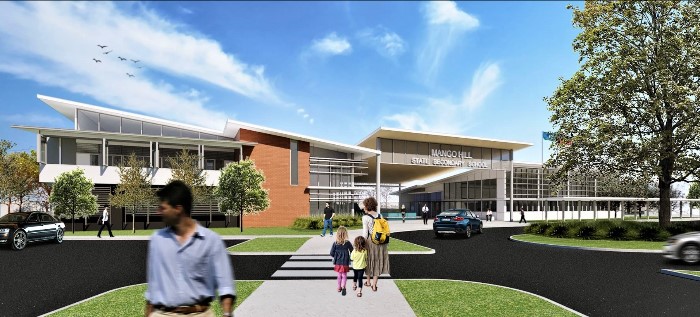
Unlike older suburbs where schools were retrofitted into existing neighbourhoods, Mango Hill's schools were planned as part of the community from the start. The State Secondary College opened in 2020 as part of the Queensland Government's 2020 Ready Program, one of 61 schools across the state built to accommodate the wave of students entering high school.
The Urban Village — Mango Hill's Next Chapter
The Mango Hill Urban Village is the suburb's most ambitious development yet. A 10.36-hectare mixed-use precinct planned for ~2,329 dwellings in towers ranging from 8 to 30 storeys, 118,000m² of commercial space, and an estimated 12,000 jobs. This is not a shopping centre with apartments on top — it's a genuine town centre designed to be the heart of a city of 25,000.
Other developments in the pipeline include 1785 Anzac Avenue (715 dwellings across 13 buildings), 1859 Anzac Avenue (a new shopping centre with dining, health, and recreation), and the Avela Townhouse Community (116 townhomes, construction expected 2027).
Who Should Buy Here?
Mango Hill is for young families who want a modern home on a proper block without paying inner-north prices. It's for investors targeting the growth corridor — the population trajectory, infrastructure pipeline, and rental demand (<1% vacancy) make a compelling case. It's for commuters who value train access over driving time.
And it's for anyone who appreciates a suburb that was designed, not assembled. The parks are where they are because someone thought about it. The train stations are where they are because the plan called for them. The mango trees are still there, lining Anzac Avenue — 700 metres of living history, shading a community that didn't exist when they were planted.